Showing posts with label e. Show all posts
Showing posts with label e. Show all posts
Sunday, February 15, 2015
2015 Mercedes Benz E Class Price and Specs
2015 Mercedes Benz E-Class Price and Specs
2015 Mercedes E-Class General Review

2015 Mercedes Benz E-Class Price and Specs- Mercedes E class is a lineup of official autos with 60 years of convention. Current ninth era accompanies essentially every body sort accessible. In the not so distant future brought most refreshments since presentation in 2009 and 2015 Mercedes E Class year model will be persisted.
2015 Mercedes E-Class Engine
Current Mercedes E Class lineup is finished with E250 car, E350 car, wagon, car and cabriolet, E550 car, car and cabriolet and E63 AMG car and wagon. With such a large number of decisions in body sort come five powertrain choices. E250 car is fueled by 2.1l Twin-Turbo Diesel I4 motor with 195 hp and 369 lb-ft of torque. E350 line accompanies 3.5l V6 motor that conveys 302 hp and 273 lb-ft of torque, while E550 line has 4.6l Biturbo V8 motor that is sufficient for 402 hp and 443 lb-ft of torque.

First class E63 AMG accompanies 5.5l AMG Biturbo V8 motor that has 550 hp and 531 lb-ft of torque, or in S display 577 hp and 590 lb-ft of torque. even E Class has a half and half option, E400 with 3.5l V6 motor that has 302 net cross breed hp and 273 lb-ft of torque coupled with lithium-particle batteries. 7-pace programmed transmission runs over the board, while drivetrain is either RWD or 4wd (4matic).
2015 Mercedes E-Class Outside
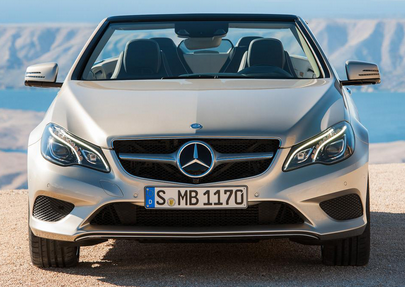
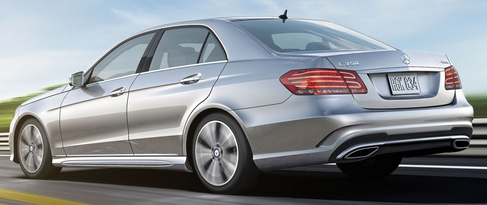
Outside was as of late facelifted and 2015 Mercedes E Class models will for the most part accompany new chrome grilles (one-stripe, star and cross section with cars and cabrios, three-bar and lattice with vehicles and wagons) and smoother and more straightforward lines over the lineup. Long nose, laid-back headlights, cleared back windshield and sharp backside have turned into a trademark of Mercedes lately.
2015 Mercedes E-Class Inside
Inner part is as lavish as ever, with standard vinyl and wood lodge trim that can be moved up to aluminum, carbon-look trim or high-review wood. Seats have cowhide upholstery everywhere throughout the lineup which is the minimum you could anticipate from them.
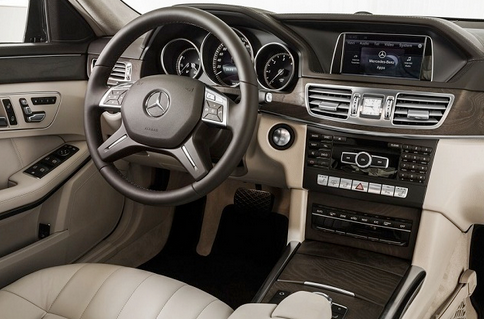
Dashboards in all models are rakish and overwhelming constructed, rich with mahogany or whatever other trim you pick. Instrument board has high-determination color showcase connected with infotainment framework that controls sound, feature, without hands and discretionary route characteristic. Power sunroof is standard, while warmed seats and 1200-watt, 14-speaker Bang & Olufsen sound framework are discretionary. There are numerous wellbeing gimmicks over the scope of Mercy E class lineup and some of them are: dependent upon 11 airbags, encompass view cam, rearview cam and stopping sensors, blind side screens, versatile journey control, and so forth.
2015 Mercedes E Class Price
Costs additionally shift from model to model and the minimum lavish E250 vehicle will cost around $51,500. E350 car and car will be accessible for approximately $52,500, while E550 type, together with E350 wagon will cost around $60,000. AMG vehicle will have a sticker of about $93,000, while the Sport model will be significantly more extravagant at $100,000. Cabrio models cost in the middle of $60,000 and $70,000 and the luxurious of E Class is AMG wagon at more than $102,000.

Tuesday, February 10, 2015
2014 Mercedes Benz E 63 AMG
Mercedes-AMG continues to champion performance, dynamism and efficiency: the new E 63 AMG is now available as a particularly powerful S-Model with an output of 430 kW (585 hp), 800 Newton metres of torque and featuring a newly developed performance-oriented AMG 4MATIC all-wheel-drive system. The AMG 5.5-litre V8 biturbo engine continues to be the absolute pinnacle of efficiency: the combination of high performance and low fuel consumption remains unrivalled by any other competitor in the segment worldwide. The permanent all-wheel drive is also optionally available for the other E 63 AMG models – on which the V8 engine has been uprated from 386 kW (525 hp) to 410 kW (557 hp), with 720 Nm of torque. With this range, Mercedes-AMG is premiering high-performance passenger car models with an all-wheel-drive system geared to driving dynamics.
The launch of the new, customised model variants will offer Mercedes-AMG customers greater scope for individuality than ever before. The new E 63 AMG presents a more powerful character and a more dynamic appearance than all its predecessors: the new AMG design philosophy is immediately apparent at first glance, with the new "twin blade" radiator grille and the new "A-wing" in the AMG front apron defining the exclusive look. As previously, the top AMG model is available as a Saloon and Estate. The E 63 AMGs appeal is also boosted by substantially enhanced value for money: customers now receive more performance and driving dynamics and a broader scope of standard equipment and appointments.
The CLS 63 AMG also benefits from the new model range constellation: similarly to the E 63 AMG, the Coupé and Shooting Brake will also be available with performance-oriented AMG 4MATIC all-wheel drive. Alongside the successful SUVs – ML 63 AMG, GL 63 AMG, G 63 AMG and G 65 AMG - two passenger car model ranges comprising up to eight unique models with all-wheel drive are now available from Mercedes-AMG in the guise of the E 63 AMG and the CLS 63 AMG. Additional models featuring performance-oriented AMG 4MATIC all-wheel drive, such as the A 45 AMG and the CLA 45 AMG, will follow this year.
"Driving Performance encapsulates the philosophy pursued at Mercedes-AMG," explains Ola Källenius, Chairman of Mercedes-AMG GmbH. The new model variants of the E 63 AMG and CLS 63 AMG clearly demonstrate how we are now offering our customers even more individuality. The S-Models in particular represent the most attractive proposition in the segment, boasting substantially enhanced value for money: the highest power and torque ratings in the segment, the new performance-oriented AMG 4MATIC all-wheel drive, the new design and substantially more standard equipment and appointments are the outstanding strengths of the new high-performance automobiles from Affalterbach. With the new all-wheel-drive S-Models we will reach new customers and markets."
"With the exclusive S-Models, we have sharpened the dynamic profile of the E 63 AMG and the CLS 63 AMG substantially," adds Tobias Moers, head of overall vehicle development and member of the management board of Mercedes-AMG GmbH. "These high power and torque ratings are exclusive to AMG. Our AMG 5.5-litre V8 engine remains the most efficient series production V8 engine in the world. The newly developed, performance-oriented AMG 4MATIC all-wheel drive attains the best acceleration values in the segment, as well as offering our customers markedly higher driving dynamics than ever before."
Overview of models for the German market:
E 63 AMG Saloon | E 63 AMG 4MATIC Saloon/Estate | E 63 AMG 4MATIC S-Model Saloon/Estate | |
Displacement | 5461 cc | 5461 cc | 5461 cc |
Output | 410 kW (557 hp) at 5500 rpm | 410 kW (557 hp) at 5500 rpm | 430 kW (585 hp) at 5500 rpm |
Max. torque | 720 Nm at 1750-5250 rpm | 720 Nm at 1750-5250 rpm | 800 Nm at 1750-5000 rpm |
Fuel consumption NEDC combined | 9.8 l/100 km | 10.3 (10.5) l/100 km | 10.3 (10.5) l/100 km |
CO2 emissions | 230 g/km | 242 (246) g/km | 242 (246) g/km |
Acceleration 0 - 100 km/h | 4.2 s | 3.7 (3.8) s | 3.6 (3.7) s |
Top speed | 250 km/h* | 250 km/h* | 250 km/h* |
* electronically limited; values for E 63 AMG Estate in brackets
Acceleration to 100 km/h from a standing start in 3.6 seconds provides the E 63 AMG S-Model with a comfortable lead over the entire competition; the top speed stands at 250 km/h (electronically limited). In addition to the increase in output, this is also attributable in no small part to the performance-oriented AMG 4MATIC all-wheel drive with a power distribution ratio of 33 to 67 percent (front/rear axle). Perfect traction during acceleration effectively avoids slip-induced losses.
On the new S-Model the AMG 5.5-litre V8 biturbo engine generates a maximum output of 430 kW (585 hp) and maximum torque of 800 Newton metres – representing an increase of 20 kW (28 hp) over the AMG Performance package which was previously available as an option. This enhanced performance and power results from adaptation of the engine application, an increase in peak pressure and a rise in the charge pressure from 0.9 to 1.0 bar. At 410 kW (557 hp) and 720 Newton metres, the basic model also boasts an increase of 24 kW (32 hp) and 20 Newton metres over its predecessor.
Despite added power and enhanced performance, all models of the E 63 AMG offer high efficiency, low fuel consumption and low exhaust emissions. The AMG 5.5-litre V8 biturbo engine remains the most efficient series production V8 engine around – with substantially more cubic capacity than its direct competitors. The E 63 AMG rated at 410 kW (557 hp) with rear-wheel drive runs on 9.8 litres of fuel per 100 kilometres in accordance with NEDC (230 grams of CO2). The variant with performance-oriented 4MATIC all-wheel drive and the S-Model rated at 430 kW (585 hp) with all-wheel drive display only marginally higher fuel consumption, at 10.3 to 10.5 litres per 100 km (242 grams to 246 grams of CO2). As an additional boon, following the implementation of internal engine measures all E 63 AMGs meet the requirements of the stringent Euro 6 emissions standard which will not enter into force until 2015.
AMG SPEEDSHIFT MCT 7-speed sports transmission for personal set-up
Maximum individuality and customised dynamics – these are the special strengths of the AMG SPEEDSHIFT MCT 7-speed sports transmission. The four modes – "C" (Controlled Efficiency), "S" (Sport), "S+" (Sport plus) and "M" (Manual) – offer the driver a personal set-up. In "C" mode, the ECO start/stop function is active and switches off the eight-cylinder engine when the vehicle is at a standstill. In addition, the transmission characteristics are tangibly soft, with smooth and early gear changes. Second gear is generally used as the starting gear in this mode.
The engine and transmission are far more agile in "S", "S+" and "M" mode; in addition, the ECO start/stop function is deactivated. Partial suppression of the cylinders proves perfect for an emphatic driving style: briefly and precisely interrupting ignition and injection under full load leads to even faster gearshifts with a more emotional sound than before. An automatic double-declutching function for downshifting and the RACE START function are also included as standard with the AMG SPEEDSHIFT MCT 7-speed sports transmission.
Performance-oriented 4MATIC all-wheel drive for the ultimate in dynamism
The performance-oriented AMG 4MATIC all-wheel drive distributes the engine torque at a ratio of 33 to 67 percent (front/rear axle). The rear-biased power distribution provides for signature AMG high driving dynamics and superlative driving enjoyment. The 3-stage ESP® has been tailored specifically to the permanent all-wheel drive system. In "SPORT Handling" mode, the Torque Vectoring Brake performs selective braking intervention on individual wheels in the interests of high agility, thereby avoiding understeering when turning and cornering. In bends, specific brief braking of the inner rear wheel results in defined cornering of the vehicle.
The AMG 4MATIC all-wheel drive enhances driving safety and grip on wet or wintry road surfaces. Optimum traction is guaranteed by a multi-disk clutch with a locking effect of 50 Newton metres which exploits the frictional connection potential of all four wheels to the full on snow and ice in particular. The technical basis is provided by a transfer case for the additional power take-off to the driven rear axle. This transfer case is integrated compactly into the AMG SPEEDSHIFT MCT 7-speed sports transmission and requires virtually no additional installation space. The torque is transmitted from the power take-off via a propeller shaft to the front axle. Power transmission from the front-axle differential to the front-left drive shaft is effected via an intermediate shaft which passes through an encapsulated shaft duct in the engine oil pan. The compact and weight-optimised design results in a comparatively low level of additional weight for the all-wheel-drive system of only 70 kilograms.
E 63 AMG S-Model with differential lock on the rear axle
The E 63 AMG S-Model sees Mercedes-AMG going one step further. True to the "Driving Performance" philosophy, the most powerful E-Class is additionally fitted with a differential lock on the rear axle. This high-tech package results in a further increase in traction, ultimately leading to even greater driving dynamics and enhanced driving enjoyment, especially on the race track.
All E 63 AMG models feature the AMG RIDE CONTROL sports suspension with electronically controlled damping system. The front axle employs a steel-spring suspension system, while the rear axle is fitted with a fully load-bearing air suspension system. Pressing the button marked with a shock absorber in the AMG DRIVE UNIT is sufficient to switch the electronics from "Comfort" to "Sport" or "Sport plus". The three-link front suspension has undergone further optimisation for the S-Model and the E 63 AMG with all-wheel drive. In conjunction with the newly developed axle components produced in aluminium, these optimisation measures result in markedly enhanced grip and agility combined with a high level of neutrality during fast cornering. The markedly more performance-oriented elastokinematics are exclusive to the S-Model, and offer the driver maximum neutrality and even better feedback and grip at the critical limits. With rear-wheel or all-wheel drive, the E 63 AMGs 48 millimetre wider track at the front offers substantially greater stability at high cornering speeds and improved road feel. Increased negative camber on both axles additionally boosts lateral dynamics.
Electromechanical AMG speed-sensitive steering complements the vehicles set-up to perfection, the direct steering ratio of 14 : 1 providing for extremely agile handling in bends in conjunction with the variable servo assistance geared to the given suspension mode. The E 63 AMG is fitted as standard with 10-spoke AMG light-alloy wheels painted in titanium grey and featuring a high-sheen finish. Tyres in size 255/40 R 18 are fitted to 9.0 x 18 wheels at the front, while the 9.5 x 18 rear wheels have 285/35 R 18 tyres. The all-wheel-drive and S-Model come with tyres in size 255/35 R 19 (front) and 285/30 R 19 (rear) on AMG light-alloy wheels in size 9.0 x 19 and 9.5 x 19. Only the high-performance S-Model features 10-spoke light-alloy wheels painted in matt titanium grey with a high-sheen rim flange.
Optional AMG ceramic high-performance compound brake system
The E 63 AMG is equipped with an extremely effective AMG high-performance braking system befitting its status as an AMG automobile. The front and rear axles sport ventilated and perforated brake disks in ample 360 millimetre format. The disks which are subject to particularly high levels of stress and strain on the front axle feature the composite braking technology which has been tried and tested in the field of motor sport. Callipers in a silver painted finish with white AMG lettering and incorporating six pistons (front) and four pistons (rear) provide for spontaneous, fading-resistant deceleration and the shortest stopping distances. Callipers in a red painted finish distinguish the S-Model.
An AMG ceramic high-performance composite braking system is exclusively available for the S-Model as an optional feature – recognisable by the even larger 402 millimetre brake disks and the "AMG Carbon Ceramic" logo on callipers sporting a special paint finish. This ceramic system is around 40 percent lighter, providing for reduced unsprung masses and enhanced driving dynamics, agility and ride comfort. The superior hardness of the ceramic brake disks leads to a longer service life and greater resistance to extreme stress and heat. Distinctive design creating an even more dynamic and exclusive aura The dynamism and performance stemming from the fascinating technology of the new E 63 AMG are also transported by the design as defining attributes of the vehicle. The AMG high-performance automobile sets new design trends in the process. The E 63 AMG is the first AMG model to present the new AMG design philosophy. Predominant elements are the AMG "twin blade" radiator grille in silver chrome and the so-called "A-wing". The new, three-dimensional air deflector spans the entire width of the AMG front apron, presenting the stylised "A" which is a hallmark of AMG vehicles. The "A-wing" painted in the cars exterior colour with a trim strip in silver chrome provides the backdrop for three large cooling air intake openings. On the side air intakes, black flics provide for an ideal inflow of air into the cooling modules, while at the bottom a front splitter painted in the cars exterior colour helps to reduce lift. Convex and concave surfaces dynamically combine the new front end of the E 63 AMG featuring a sculptural design with the distinctive flared wings on which "V8 BITURBO" lettering alludes to the superior engine power on board.
The striking air outlet openings at the sides, the black grille and the two sets of twin chrome tailpipes belonging to the AMG sports exhaust system provide an impression of width at the rear. The black diffusor insert with pronounced fins lends the E 63 AMG a powerful touch of race track atmosphere at the rear.
S-Model with even more striking design features
Numerous newly designed, even more striking design features set the E 63 AMG S-Model apart from the basic model. The "A-wing" at the front cuts a fine figure in high-gloss black, for example. The front splitter is finished in silver chrome, as are the striking three-dimensional inserts in the side sill panels. The rear end presents a powerful impression by virtue of the trim strip in silver chrome in conjunction with the two sets of distinctive twin chrome tailpipes belonging to the AMG sports exhaust system. The AMG spoiler lip (on the Saloon only) painted in the cars exterior colour reduces lift at high speeds.
The 10-spoke AMG light-alloy wheels in a matt titanium grey painted finish with high-sheen rim flange fit snugly in the wheel arches with tyres in size 255/35 R 19 at the front and 285/30 R 19 at the rear. Brake callipers in red painted finish and an AMG logo on the trunk lid sporting an "S" in contrasting black are other characteristic features of the S-Models.
Dynamic, exclusive atmosphere inside
When the customer so desires, the interior of the E 63 AMG S-Model features grey contrasting stitching on the AMG sports seats, the door centre panels, the door armrests and the centre console. Silver seat belts are also on board in conjunction with a black interior. The rim of the AMG Performance steering wheel in black nappa leather is flattened at the top and bottom and boasts grip areas in Alcantara®and grey contrasting stitching. The front head restraints of the AMG sports seats incorporate exclusive embossed AMG emblems. The AMG instrument cluster in a new design features an "S AMG" logo on the 320 km/h speedometer and red applications. The standard scope of equipment and appointments further includes AMG door sill panels with white LED illumination, an electrically operated rear roller blind (Saloon only) and the anti-theft protection package.
Superior-quality materials, excellent workmanship and an exclusive atmosphere are common to all E 63 AMG models. The new AMG-specific analogue clock in IWC design is an attractive eye-catcher between the two central air vents.
The standard scope of equipment and appointments for all E 63 AMG models further includes (selection):
- AMG door entry sills
- AMG sports pedals in brushed stainless steel with rubber studs
- ATTENTION ASSIST
- COLLISION PREVENTION ASSIST
- Metallic paint finishes
- LED High Performance headlamps
The following individualisation options are available (selection):
- AMG Carbon Fibre I package (A-wing on the front apron, side sill panel inserts and upper trim on the rear apron in carbon fibre)
- AMG Carbon Package II (exterior mirror housings and AMG spoiler lip in carbon fibre on the Saloon)
- AMG Night package (A-wing on the front apron, front splitter, side sill panel inserts, exterior mirror housings and trim strips on the rear apron in
- high-gloss black, black twin tailpipe trims in chromed finish)
- AMG carbon-fibre engine cover
- AMG 5-spoke forged wheels with covered wheel bolts, painted in titanium grey with a high-sheen finish
- AMG trim in carbon fibre/piano lacquer
- designo roof lining
- designo trim
Bang & Olufsen BeoSound AMG high-end surround sound system
A very special highlight among the optional equipment and appointments for the E-Class Saloon and Estate is the Bang & Olufsen BeoSound AMG high-end surround sound system, developed by Mercedes-Benz and Mercedes-AMG together with renowned Danish audio specialist Bang & Olufsen. The sound system also offers playback in Dolby Digital 5.1 quality and enables an exclusive audio experience of the very highest standard. This performance is made possible by a 1200 W amplifier and 14 high-end loudspeakers with neodymium driver in conjunction with precision distribution of the audio signals by the sound processor. This integrated digital sound processor (DSP) enables the driver to select a special B&O sound menu via COMAND. Front, central or rear sound setups can be selected in True Image™ mode, resulting in an authentic audio experience in the selected listening position. Various sound modes are additionally stored in the "Sound Mode" menu, enabling selection between a "Reference" high-end studio sound and a surround option. While "Reference" focuses on an authentic, unadulterated rendering of the artists performance, the special surround sound mode is particularly ideal for live or concert music, creating a unique panoramic sound in the vehicle without compromising the natural character of the recording.
The illuminated 50 W tweeters featuring Acoustic Lens Technology in the mirror triangles add special highlights. High-quality Bang & Olufsen aluminium loudspeaker covers in "silver chrome" bearing the Bang & Olufsen logo additionally allude to the exclusive character of the Bang & Olufsen BeoSound AMG high-end surround sound system.
The market launch of the new E 63 AMG with rear-wheel drive will begin in April 2013, with the all-wheel-drive E 63 AMG and the E 63 AMG S-Model following in June.
(Mercedes-Benz Press Release)
Thursday, February 5, 2015
2015 Audi A3 Sportback e tron
The A3 Sportback e-tron from Audi is a latest-generation plug-in-hybrid car. The premium compact vehicle will go on sale from 2014 and is a genuine Audi. It combines sporty power with impressive efficiency and abundant driving enjoyment with unrestricted everyday utility. The A3 Sportback e-tron offers 150 kW (204 hp) of system power and achieves average consumption of only 1.5 liters per 100 kilometers (156.81 US mpg) of gasoline. In the electric mode its operating range is up to 50 kilometers (31.07 miles), with the TFSI engine adding a further 890 kilometers (553.02 miles).
From 0 to 100 km/h (62.14 mph) in 7.6 seconds and a top speed of 222 km/h (137.94 mph) – the Audi A3 Sportback e-tron adds an extra highlight to the sporty character of the compact premium car line. In accordance with the ECE standard for plug-in hybrid vehicles, its average CO2 emissions are a mere 35 grams per km (56.33 g/mile) – equivalent to consumption of 1.5 liters of fuel per 100 kilo-meters (156.81 US mpg).
Thanks to the ultra lightweight construction philosophy of Audi, the unladen five-door model complete with all electrical components weighs less than 1,580 kilo-grams (3,483.30 lb), with space for five occupants and plenty of cargo. It comes complete with all the brand’s strengths – elegant design, sporty chassis, top-notch ergonomics, excellent build quality and an extensive choice of high-end assistance and infotainment systems.
The 1.4 TFSI combustion engine is one of the most modern power units of Audi. Inside the engine compartment, looking in the direction of travel, it is positioned a few centimeters further to the right than usual, to create space for the high-voltage components. Its crankcase is made from diecast aluminum, weighing little more than 100 kilograms (220.46 lb).
The four-cylinder engine is state of the art in every respect – its low frictional losses, its turbocharger, its intercooler and its thermal management. One special feature is the way the exhaust manifold is integrated into the cylinder head. After a cold start, it brings the coolant swiftly up to operating temperature. At high loads the water jacket lowers the temperature of the exhaust gas.
Thanks to the high electric range of up to 50 kilometers (31.07 miles), many customers will only rarely experience the gasoline engine of the Audi A3 Sportback e-tron in action. Another effect of the plug-in hybrid concept is that the TFSI is often only activated in kickdown situations, and is therefore subjected to high loads while still cold. For that reason, the developers have equipped it with a variety of protective features. These include modified cylinder liners and piston rings, plus a sensor to measure oil quality.
Developing 110 kW (150 hp) and 250 Nm (184.39 lb-ft), the 1.4 TFSI is a powerful unit. It supplies peak torque across the entire speed range from 1,750 through 4,000 rpm, thus harmonizing excellently with the electric motor. The maximum of 330 Nm (243.40 lb-ft) is available virtually from the off, and is maintained constantly across a broad speed range up to about 2,200 rpm. Its maximum output is 75 kW. The system output of the A3 Sportback e-tron is 150 kW (204 hp), and system torque is 350 Nm (258.15 lb-ft). With the combination of electric motor and combustion engine, an overall operating range of up to 940 kilometers (584.09 miles) is possible. And its road performance is unwaveringly sporty: It takes a mere 4.9 seconds to sprint from 0 to 60 km/h (37.28 mph). The electric motor is a permanently excited synchronous machine. It weighs 34 kilograms (74.96 lb) and is liquid-cooled via a cooling jacket in the stator. The electric motor is located between the engine’s dual-mass flywheel and the newly developed separating clutch, the K0 clutch. When the TFSI starts, it is tow-started by the electric motor via the clutch. As soon as the former has achieved the same speed as the electric motor, the clutch is opened. This smooth, highly precise process takes place within half a second.
Together with the K0 separating clutch, the electric motor is integrated into a newly designed six-speed e-S tronic, which transfers the power to the front wheels. Like all Audi dual-clutch transmissions, it consists of two subsidiary transmissions that are served by the two multi-plate clutches K1 and K2. Gears are shifted by switching the clutches. This takes just a few hundredths of a second and happens without any noticeable interruption in propulsive power. Depending on the level of charge, the voltage ranges between 280 and 390 volts. The battery consists of 96 prismatic cells arranged into eight modules of twelve cells each. Including the electronic components – the battery management controller and the battery junction box – the battery system weighs 125 kilograms (275.58 lb). Its housing is bolted to the vehicle floor at five points, and the lower shell is made from aluminum.
An elaborate liquid cooling system ensures that the battery is kept within a suitable temperature range during operation. Drivers of the Audi A3 Sportback e-tron will be able to start electrically in hot summer conditions and at sub-zero winter temperatures alike. Four cooling plates regulate the temperature of the high-voltage battery’s eight modules. The cooling system represents a separate low-temperature circuit in the car and runs on a separate cooler housed in the engine compartment. If need be, it can be connected to the air conditioning system and even divided into two subsidiary circuits.
In the event of a crash sufficiently severe to trigger the belt tensioners or airbags, the entire system is disconnected from the power supply. The flat-shaped battery is installed under the rear bench seat – an area where the high-strength and ultra-high-strength steel components of the occupant cell form an especially strong structure. Its housing and interior structure are equally of a very sturdy design.
The 12-volt battery for the low-voltage consumers and the 40-liter (10.57 US gallons) fuel tank are located above the rear axle. Both components barely impinge on the trunk of the A3 Sportback e-tron – in the standard configuration it measures 280 liters (9.89 cubic ft) and 1,120 liters (39.55 cubic ft) with the rear seat backs down.
Audi supplies the A3 Sportback e-tron with a universal charging lead as standard. The customer can interchange the connecting plugs so that the lead can be used both with domestic power sockets and with industrial power sockets, for full charging performance. These connecting plugs are country-specific in design, so that the A3 Sportback e-tron can be recharged anywhere in the world.
For easy use at home, the charging lead can be clipped into a wall-mounted holder. Even this holder has an Audi design, and as well as being a convenient way to store and use the lead, it is lockable. The charging equipment is thus protected against theft even when kept outdoors.
The charging lead supplies the car with alternating current from the grid via the charging connection, which is in the Singleframe grille behind the fold-out four rings. As well as a status LED, the unit includes two pushbuttons allowing the user to choose between timer-controlled charging and immediate charging. In the car, the alternating current fed in by the charger is converted into direct current for the battery.
From an industrial power socket, it takes slightly more than two hours to charge the battery fully. From a normal domestic power socket in Europe, the charging process takes about three hours and 45 minutes. Audi is working intensively on a joint project with a supplier of renewable power, because electric driving only makes ecological sense if such power is available.
Another medium-term project of Audi is automatic charging without physical contacts, referred to as Audi wireless charging. Here the charging process involves an alternating magnetic field between the stationary charging pad on the ground and the mobile charging pad in the car, similar to the principle used by an electric toothbrush.
The power electronics, located in the engine compartment, then convert the stored direct current into three-phase current for the electric motor. It has six high-performance transistors for this task. The power electronics, which include a DC/DC converter for connecting up the vehicle’s 12-volt electrical system, are compact and light in weight. They have a total volume of 8 liters (0.28 cubic ft) and weigh 10 kilograms (22.05 lb). Together with the charger, it is incorporated into the same cooling circuit as the traction battery.
There are yet more special components for electric driving. The air conditioning compressor has an electric drive integrated into the high-voltage network. A thermoelectric heating element and a gasoline-powered auxiliary heater round off the interior heating system.
The hybrid management is configured to function in harmony with the electric motor. Up to medium loads the electric motor, now functioning as alternator, largely handles retardation. The energy that it recovers is fed into the traction battery. The wheel brakes only become active if the driver presses the pedal more forcefully.
Braking recuperation is just one of several operating statuses of the Audi A3 Sportback e-tron. The car is almost always started electrically, even at very low temperatures, in extremely hot conditions or when battery charge is very low. The electric motor’s high torque enables the sporty compact car to accelerate away powerfully. It goes from 0 to 60 km/h (37.28 mph) in 4.9 seconds – with quiet but forceful propulsion.
In the electric mode the Audi A3 Sportback e-tron can travel at up to 130 km/h (80.78 mph) – it could go faster, but that would not be efficient. When traveling at a constant 100 km/h (62.14 mph), generally only the electric motor is active provided there is sufficient energy in the battery. As soon as the driver steps hard on the accelerator, for instance to overtake, it prompts the TFSI to cut in via the K0 separating clutch. In the boost mode the Audi A3 Sportback e-tron accelerates with all of 350 Nm torque (258.15 lb-ft).
When the driver releases the accelerator at high speed, the hybrid management enters the gliding mode. Now both drives are entirely deactivated and are no longer developing braking torque. When stepping off the accelerator at medium and low speeds, the system recovers energy through coasting recuperation; braking recuperation then becomes active when the brake pedal is pressed, except if a full brake application is needed.
The driver has several ways of actively managing the vehicle’s response. They can choose from three programs using a button in the driving area and the e-S tronic selector lever. The EV characteristic map gives priority to electric drive, whereas the Audi A3 Sportback e-tron behaves very sportily in the S program. The hybrid hold mode can be selected via a menu in the MMI. This mode preserves the electrical energy stored in the battery for later use. In addition, the driver can specify detailed settings in the Audi drive select control system. Different stages of coasting recuperation are permanently assigned to the individual Audi drive select modes. Within certain ranges, this enables the driver to influence how the battery is charged while on the move.
The Audi A3 Sportback e-tron displays supply precise information about the driveline status. The powermeter in the instrument cluster shows the system’s overall output, as well as the status of the driveline and the battery charge. The monitor for the MMI navigation plus shows the energy flows in the hybrid system. In addition, the driver information system displays the operating ranges and consumption figures for electricity and gasoline.
Under the Audi connect umbrella Audi is currently developing an entire portfolio of innovative online services for the A3 Sportback e-tron. Drivers can use these to monitor and manage a wide range of functions via their iOS or android smartphone or via a web portal.
The driver can call up the car’s status – such as the battery’s momentary charge status, the electric range or its current parked location. They can program charging schemes remotely from their mobile phone or computer. They have the option of starting and stopping charging or setting the charging timer and climate control scheme to reflect when they next plan to drive the car. They can thus specify in detail at what time on what days they want to drive off with the battery fully charged.
The climate control planner, the third aspect, works similarly. The owner of an Audi A3 Sportback e-tron can for instance specify a target temperature for the interior according to a differentiated timetable. Adjusting the climate in advance while still hooked to the power socket is much more efficient than when driving electrically, because it does not then constitute a drain on the car battery and thus optimizes the electric range. In addition, it also adjusts the drive components to the appropriate temperature for the conditions. Finally, the web portal gives the owner the chance to check their trip data, e.g. power consumption, distance driven and speed.
Technical Data
| System output | 150 kW (204 hp) |
| System torque | 350 Nm (258.15 lb-ft) |
| Output, 1.4 TFSI | 110 kW (150 hp) |
| Torque, 1.4 TFSI | 250 Nm (184.39 lb-ft) from 1,750 to 4,000 rpm |
| Output, electric motor | Max. 75 kW |
| Torque, electric motor | Max. 330 Nm (243.40 lb-ft) |
| Battery capacity / voltage | 8.8 kWh / 280 to 390 volts |
| 0 – 100 km/h (62.14 mph): | 7.6 s |
| Range in electric mode | up to 50 km (31.07 miles) |
| Overall operating range in NEDC cycle | up to 940 km (584.09 miles) |
| Consumption acc. to ECE standard | 1.5 l/100 km (156.81 US mpg) |
| CO2 emissions acc. to ECE standard | 35 grams/km (56.33 g/mile) |
| Top speed | 222 km/h (137.94 mph) |
| Length / width / height | 4,310 / 1,785 / 1,424 mm (14.14 / 5.86 / 4.67 ft) |
| Wheelbase | 2,630 mm (8.63 ft) |
| Unladen weight | 1,574 kg (3,470.98 lb) |
(Audi Press Release)
Subscribe to:
Posts (Atom)